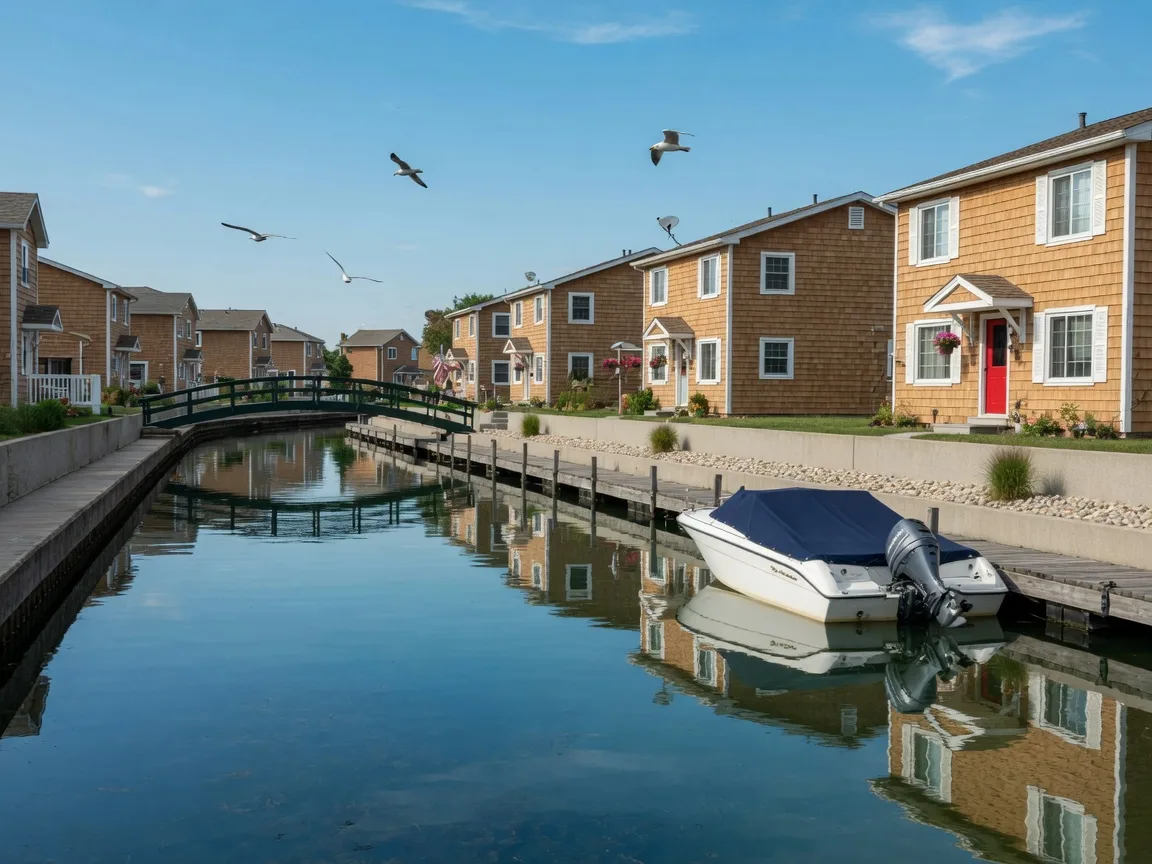
Canal homes are the picture of St. Clair Shores, and they are also more complicated than a landlocked house, in the best and most honest way. If you are looking at one, work down this checklist before you get emotionally attached, so the love story has solid ground.
01. Start with the seawall
The seawall is the part of the house that touches the water, and it is expensive to put right. Ask when it was installed or last repaired, who maintains it, and whether it is shared with a neighbor's property. A good inspector who knows marine construction, not just a generic home inspector, is worth every dollar here.
02. Flood insurance and the lender
Most canal homes sit in FEMA flood zones, and with a federally backed mortgage, flood insurance is required in those high-risk areas. This is not a deal killer, it is a line item. Look up the address on the FEMA Map Service Center and get a real quote before you budget, because premiums vary with the property's zone and elevation.
03. The boat well and water access
If the home has a boat well, ask about its depth, its condition, and whether the dock is included. If you plan to boat, confirm the well fits your boat and check whether the canal association or the city has rules about boat size, winter storage, or trailers.
04. Dues and associations
Many canal neighborhoods have an association that maintains shared seawalls, canal dredging, or common areas, and the dues and rules are part of the real cost of the home. Ask for the budget and the recent meeting minutes. They tell you a lot about neighbors and about money management.
05. Utilities and easements
Water and sewer lines to a canal home often cross the yard or run under the seawall. Ask about the age of the connections and any easements, and budget for the well-known truth that water-side maintenance costs more and happens sooner than land-side.